Available · now

Open to senior product / UX roles · US, EU, Remote

I design complex products
until they feel obvious.

UX/UI & product designer across enterprise SaaS, expert workflows, design systems, and research-led interface design.

Selected work GIA Hamilton RKS Design Freddie Mac NomadNest

4.5+ years designing across regulated, technical, and high-context product environments — platforms used by experts, internal teams, and global institutions.

What I actually do

  • I don’t just make screens.
  • I define what the screen needs to prove.
  • I structure the flow before styling the surface.
  • I design the states most portfolios crop out.
  • I document decisions so engineering doesn’t have to guess.
  • I revise when evidence beats preference.
Portfolio Screen
One state. The happy path.
Production Screen
Ready
Empty
Loading
!
Error
Every state. The whole job.
Most portfolios ship the left. The work is the right — the empty, loading, and error states a real product can’t crop out.

Eight states, every component: default · hover · focus · active · disabled · loading · error · empty.

Four contexts. Four design muscles.

Four engagements, each proving a different muscle — in-house expert systems, enterprise UI at scale, agency end-to-end, and founder-led product. The range is the thesis, not an accident of who was hiring.

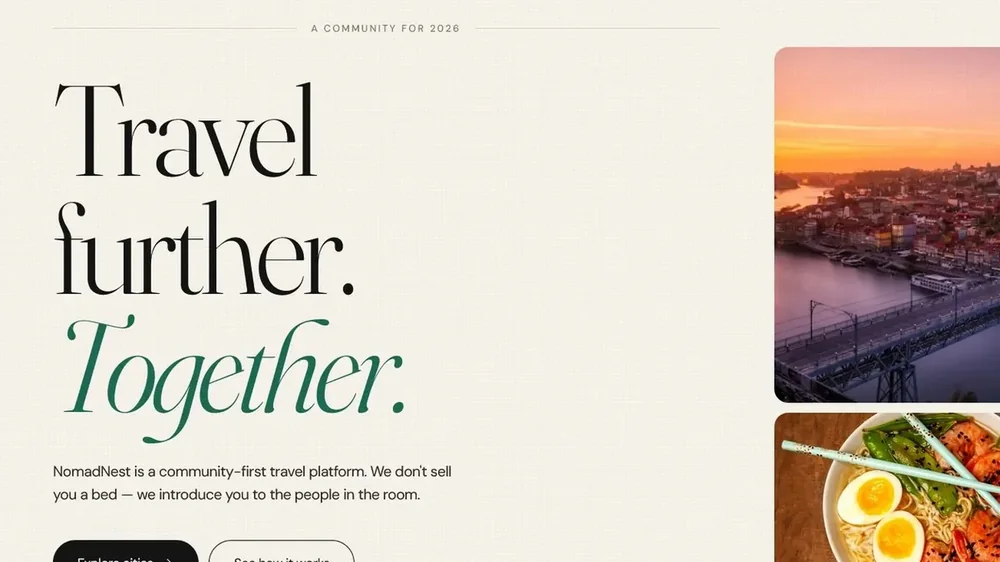
UI · Landing NomadNest landing page — editorial Travel further. Together. headline with a four-photo travel gallery ++++
№ 01 Founder

NomadNest

Founder · Product strategy · 2025–ongoing

Turning a product thesis into early-stage structure and experience language.

  • ProblemA community-first travel product where booking is solved but belonging isn’t.
  • ConstraintPre-launch — a thesis to structure, with no usage data yet to lean on.
  • MoveBuilt the V1 product structure and experience language from the thesis up.
  • ProofV1 scope locked; pre-seed independent venture.
V1 scope locked Read case study
NDA · Atmosphere GIA grading workflow — atmospheric composition referencing the lab, the diamond, and the precision tools the toolset supports ++++
№ 02 NDA

Gemological Institute of America

In-house · Expert systems · 2023–2026

Designing for precision domains where ambiguity creates operational cost.

  • ProblemExpert grading workflows where an unclear interface becomes a measurable throughput cost.
  • ConstraintInstitutional and under NDA — precision work across nine global laboratories.
  • MoveDesigned the toolset across six product surfaces, embedded with the teams using it.
  • Proof2.5+ years embedded; six product surfaces in service.
Ambiguity as defect Read case study
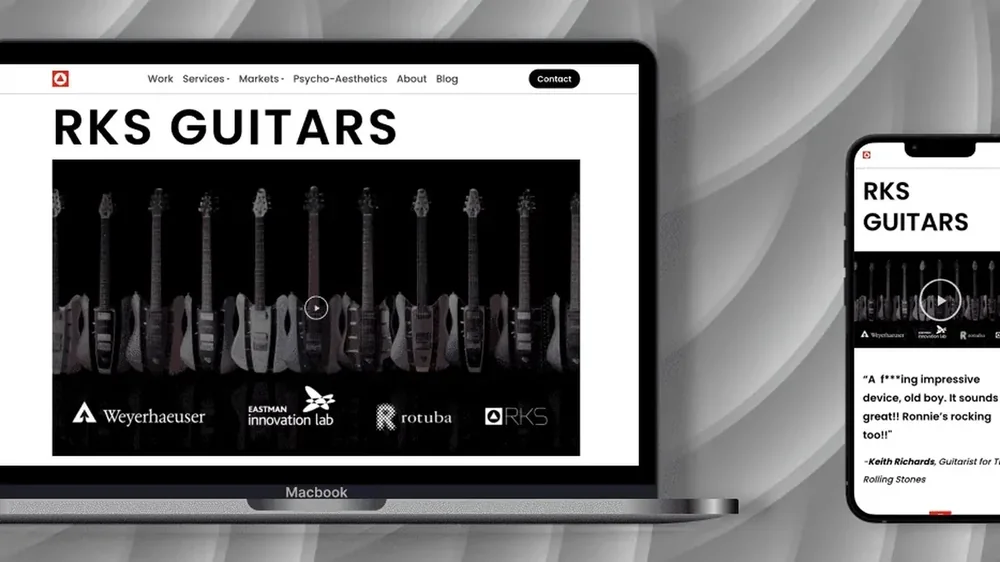
UI · Shipped RKS Design website rebuild — the RKS Guitars showcase page rendered across laptop and phone ++++
№ 03 Shipped

RKS Design

Agency · Website modernization · End-to-end

Research-led IA and visual-system execution, owned end to end.

  • ProblemA 45-year-old design firm whose site didn’t read with the authority of its own work.
  • ConstraintSole UX/UI designer and developer — research through build.
  • MoveRestructured the IA around visitor intent after discovery inverted the brief.
  • ProofFull rebuild at F500 caliber — designed and shipped.
IA inverted from research Read case study
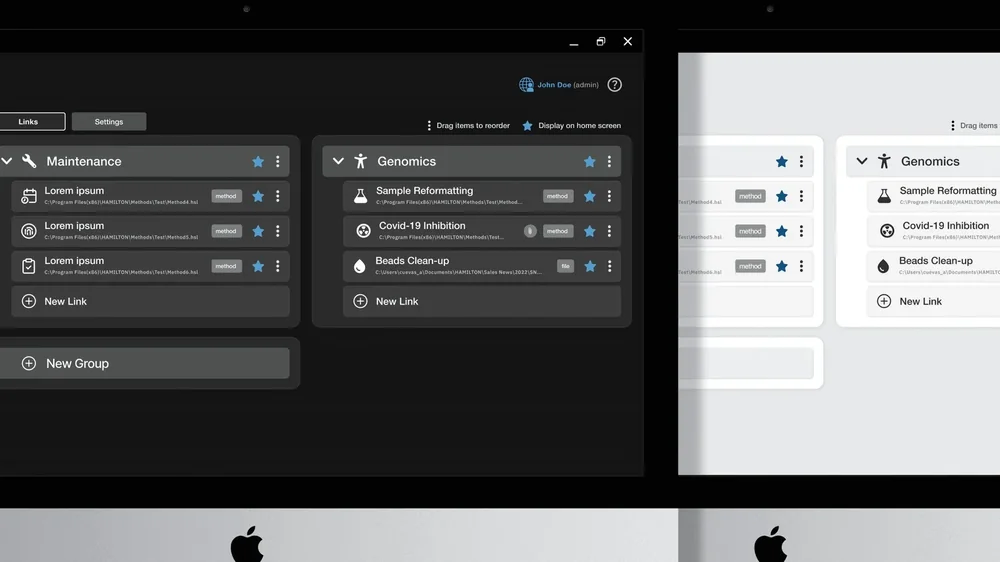
UI · Theme Split Hamilton enterprise UI — the same Settings screen rendered in dark and light themes from one set of design tokens ++++
№ 04 Shipped

Hamilton Company

Agency · Lab automation · 60+ screens

Extending a coherent visual system across themes, platforms, and rendering constraints.

  • ProblemExtend an approved design direction across 60+ enterprise screens.
  • ConstraintWPF rendering limitations across three distinct rendering contexts.
  • MoveSimplified the visual system so one set of decisions held across all three.
  • ProofTwo themes, one coherent system — shipped to engineering.
One token set, 60+ screens Read case study

The shape of the work.

Five years, five operating contexts. The question a portfolio this varied has to answer is whether the range is a thesis or a drift. Two views — the arc it followed, and the ground it covered — answer it.

The arc 2021 → 2026
  1. 2021loop (Social)Founding team
  2. 2021–23Freddie MacNDA · via RKS
  3. 2022–23Synaptic MedicalNDA · via RKS
  4. 2022HamiltonEnterprise · via RKS
  5. 2022–23RKS DesignAgency, end-to-end
  6. 2023→WildrOwn agency
  7. 2023–26GIAIn-house, domain
  8. 2026NomadNestIndependent venture

Eight engagements, one continuous line — founding team to agency to in-house to a venture of my own. The trajectory is deliberate: each context was chosen to learn what the last one couldn’t teach.

The coverage matrix 8 engagements × 3 contexts
  • Full case study
  • NDA / concurrent
  • Covered
  • Not covered

Every operating context, covered at least once. Four engagements documented end-to-end as full case studies. The range is the thesis — not an accident of who was hiring.

Principles earned under constraint.

Five positions I’ve defended in rooms where agreeing would have been easier. Not taste — conclusions, each with the project that taught it. Open any one for the reasoning.

Research reshapes the problem, not just the solution.

RKS — discovery inverted the brief; I restructured the IA around visitor intent.

What one interview cost

I’ve thrown away a month of design work because one interview revealed I was solving the wrong thing. Research that only confirms what you already believe isn’t research — it’s decoration. The reversal never happens if it’s scoped as a validation step.

If users notice the interface, the interface has failed.

Unreleased product — iterated a reply affordance until zero test participants missed it.

When a pause is a defect

When a participant pauses before acting, that pause is a defect. My first treatment was visually minimal because I’d optimized for hierarchy; one in four people missed it. The version that tested clean was not the one I’d have shipped on intuition.

Evidence outranks preference — including mine.

Hamilton — two treatments I argued for were cut once the render cost was measured.

Setting my own work aside

I’ve set aside work I was proud of because the data was unambiguous. It never gets easier and it’s always the right call. Preference has no standing in a decision once there is evidence pointing the other way.

Constraints, taken early, sharpen a design.

Hamilton — a WPF rendering limit became the filter the visual system was built through.

The case for early limits

A constraint met in sprint one produced a more disciplined system than a blank canvas would have. Treated as a late-stage blocker, a constraint forces compromise. Treated as a first-order input, it produces the design you wouldn’t otherwise have reached.

The handoff is part of the design, not cleanup.

GIA — ran sprint ceremonies while designing; watched what every vague annotation became.

What an open handoff costs

Engineering fills whatever the handoff leaves open. A missing edge case becomes a bug; an undocumented loading state gets invented by someone who didn’t design the component. A handoff should leave no decision the designer would have made differently than the person building it.

How ambiguity becomes interface.

The same path on every engagement — an unclear problem resolved into a built, documented interface. Not handed between people; carried as one continuous process.

  1. Unknowns

    Name what the team can’t yet answer.

  2. Evidence

    Interviews and testing aimed at the riskiest assumptions.

  3. Structure

    Information architecture and flow before any surface.

  4. Interface

    Layout, hierarchy, and the system that holds them.

  5. States

    Empty, loading, error, and edge cases — designed, not assumed.

  6. Handoff

    Annotated specs that leave no decision to guess.

  7. QA

    Built result checked against the design intent.

Research

Competitive landscapes read for the decisions behind them, not the features. Interviews that listen for what people don’t say. Usability testing aimed at the work I’m most attached to — that’s where the useful surprises are.

Design

Tokens, states, and edge cases decided before the showcase view. Flows that hold under real data, not demo data. The work is done when an engineer could build it without asking a question the design should have answered.

Delivery

I’ve run sprint ceremonies while designing, so I scope for what production actually does with a spec. The handoff is annotated, walked through, and treated as the last design decision — because it is one.

Where I’m strongest.

Ambiguous product spaces

NomadNest — built the V1 structure before there was data to lean on.

Expert & enterprise workflows

GIA — designed the toolset for nine global labs and the experts inside them.

Research-backed IA

RKS — restructured the IA around visitor intent after discovery inverted the brief.

Interface systems

Hamilton — one token system holding 60+ screens across three rendering contexts.

Engineering-aware handoff

GIA — ran sprint ceremonies while designing; watched what every vague annotation became.

For recruiters — the fast path

  • Role targetSenior Product Designer · UX/UI Designer
  • Best fitEnterprise SaaS, expert workflows, design systems, research-led teams
  • EngagementSenior IC or Lead · contract or full-time
  • LocationSan Diego (Pacific) · US, EU & remote worldwide
  • Portfolio depth4 public case studies, plus NDA enterprise work
  • AvailabilityOpen now — first conversations this week

Get in touch.

If you need a designer who turns ambiguity into shipped interface, this is the fastest way to start. No form — just an email, answered within 24 hours.